
Metaphysical Art - I
Metaphysical art
Metaphysical art (Italian: Pittura metafisica) was a style of painting that flourished mainly between 1911 and 1920 in the works of the Italian artists Giorgio de Chirico and Carlo Carrà. The movement began with de Chirico, whose dreamlike works with sharp contrasts of light and shadow often had a vaguely threatening, mysterious quality, 'painting that which cannot be seen'. De Chirico, his younger brother Alberto Savinio, and Carrà formally established the school and its principles in 1917.
While Futurism staunchly rejected the past, other modern movements identified a nostalgia for the now faded Classical grandeur of Italy as a major influence in their art. Giorgio De Chirico first developed the style that he later called Metaphysical Painting while in Milan. It was in the more sedate surroundings of Florence, however, that he subsequently developed his emphasis on strange, eerie spaces, based upon the Italian piazza. Many of De Chirico's works from his Florence period evoke a sense of dislocation between past and present, between the individual subject and the space he or she inhabits. These works soon drew the attention of other artists such as Carlo Carrà and Giorgio Morandi.
In his painting Turin Melancholy (1915), for example, he illustrated just such a square, using unnaturally sharp contrasts of light and shadow that lend an aura of poignant but vaguely threatening mystery to the scene. The arcades in this painting, as well as the deep perspectival space and dark-toned sky, are pictorial devices typical of De Chirico’s strange, evocative works. He gave his paintings enigmatic titles—such as The Nostalgia of the Infinite (1913–14), The Philosopher’s Conquest (1914), and The Soothsayer’s Recompense (1913)—that contribute to their cryptic effect. Other Metaphysical painters included Filippo de Pisis and Mario Sironi.
In 1917, in the midst of World War I, Carrà and De Chirico spent some time in Ferrara, where they further developed the Metaphysical Painting style that was later to attract the attention of the French Surrealists.
The Metaphysical school proved short-lived; it came to an end about 1920 because of dissension between De Chirico and Carrà over who had founded the group.
Felice Casorati
1883 – 1963

Felice Casorati
(December 4, 1883 – March 1, 1963) was an Italian painter, sculptor, and printmaker. The paintings for which he is most noted include figure compositions, portraits and still lifes, which are often distinguished by unusual perspective effects.
Casorati was born in Novara. He showed an early passion for music, but abandoned his study of piano after a serious illness, and became interested in art. To please his mother he studied law at the University of Padua until 1906, but his ambition to be a painter was confirmed in 1907 when a painting of his was shown in the Venice Biennale. The works he produced in the early years of his career were naturalistic in style, but after 1910 the influence of the symbolists and particularly of Gustav Klimt turned him toward a more visionary approach. In 1915 he had a solo exhibition at the Rome Secession III, where he showed several paintings and the first of his sculptures in varnished terracotta. His military service in World War I began that year and lasted until his discharge from the army after the death of his father in 1917.
In 1918, "intrigued by the decadent atmosphere of Turin with its sinister views", he settled there with his mother and two sisters. His works of the next decade typify, in their emphasis on geometry and formal clarity, the "return to order" then prevalent in the arts as a reaction to the war. Although many critics found his work cold, cerebral, and academic, Casorati achieved international recognition as a leading figure in this movement. Often working in tempera, Casorati drew inspiration from his study of Renaissance masters, especially Piero della Francesca, as in his 1922 portrait entitled Silvana Cenni.[5] This symmetrical composition of a seated woman in a white dress is perhaps the best-known of the artist's works. In it, the careful rendering of volumes results paradoxically in a sense of unreality which is characteristic of Casorati's art.
In 1925, Raffaello Giolli summarized the disconcerting aspects of Casorati's art—"The volumes have no weight in them, and the colors no body. Everything is fictitious: even the living lack all nervous vitality. The sun seems to be the moon ... nothing is fixed or definite"—and argued that these very qualities give his work its originality, and connect him to the metaphysical painters. Casorati himself wrote, in 1931: "In taking up, against me, the old polemic of classicism and romanticism, people rail against intellectualized and scholastic order, accuse my art of being insincere, and wilfully academic—in a word, of being neoclassical. ... since my art is born, so to speak, from within, and never has its source in changing "impressions", it is quite natural that ... static forms, and not the fluid images of passion, should be reflected in my works".
Briefly arrested in 1923 for his involvement with an anti-Fascist group, Casorati subsequently avoided antagonizing the regime. Beginning in 1923, he opened his studio to the young art students of Turin, and to emerging Italian artists such as Quinto Martini and painters of the Gruppo dei Sei (Group of Six). In 1925, one of his students was Daphne Mabel Maugham, later his wife. One of his later students was the Italian painter Enrico Accatino. His Work Carità di San Martino, 1939, is in Museo cantonale d'arte of Lugano. After 1930 the severity of Casorati's earlier style softened somewhat and his palette brightened. He continued to exhibit widely, winning many awards, including the First Prize at the Venice Biennale of 1938. He was also involved in stage design. He died in Turin in 1963.

Dreaming of Pomegranates
Felice Casorati
1913

Ritratto di Anna Maria de Lisi
Felice Casorati
1918

La donna e l'armatura
Felice Casorati
1921
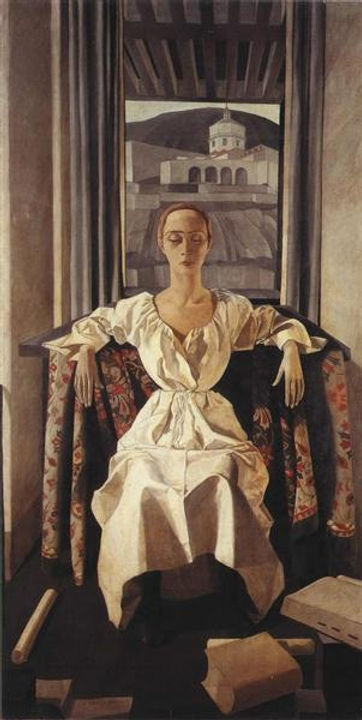
Silvana Cenni
Felice Casorati
1922
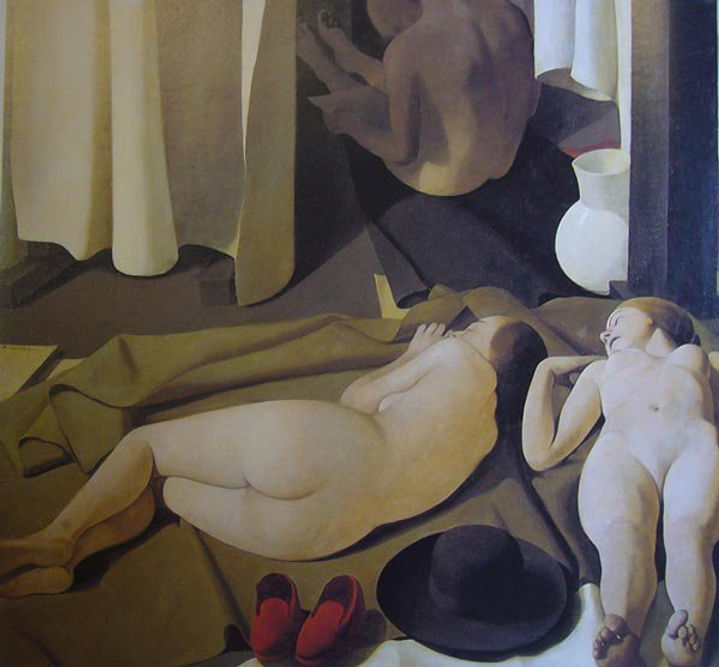
Midday
Felice Casorati
1923
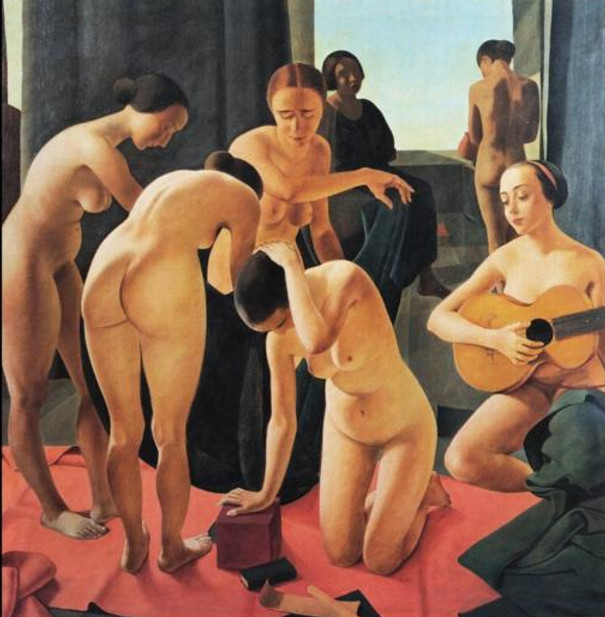
Concerto
Felice Casorati
1924

Nudo sdraiato
Felice Casorati
1934

Vocation
Felice Casorati
1939

Vendemmiatrici
Felice Casorati
1951

Fanciulla addormentata nello studio
Felice Casorati
1959

Notturno
Felice Casorati

Two girls
Felice Casorati
.png)
Felice Casorati
Nudo seduto, 1942

Girl on a red carpet
Felice Casorati
1912
Giorgio de Chirico
1888 – 1978
.jpg)
Giorgio de Chirico
Giuseppe Maria Alberto Giorgio de Chirico (10 July 1888 – 20 November 1978) was an Italian artist and writer born in Greece. In the years before World War I, he founded the scuola metafisica art movement, which profoundly influenced the surrealists. His best-known works often feature Roman arcades, long shadows, mannequins, trains, and illogical perspective. His imagery reflects his affinity for the philosophy of Arthur Schopenhauer and of Friedrich Nietzsche, and for the mythology of his birthplace.
After 1919, he became a critic of modern art, studied traditional painting techniques, and worked in a neoclassical or neo-Baroque style, while frequently revisiting the metaphysical themes of his earlier work.

GIORGIO DE CHIRICO:
PREMONITORY PORTRAIT OF GUILLAUME APOLLINAIRE. 1914 Paris.MNAN

GIORGIO DE CHIRICO:
ENIGMA OF A DAY. 1913. London. Private Collection

GIORGIO DE CHIRICO:
The Uncertainty of the Poet, 1913.

Giorgio de Chiricoю. The Enigma of the Oracle, 1911.

Giorgio de Chiricoю. The Nostalgia of the Infinite (La nostalgia dell'infinito), 1911

Giorgio de Chiricoю. Ariadne, 1913

Giorgio de Chiricoю.
The Soothsayer's Recompense, 1913

Giorgio de Chiricoю. Plaza (Piazza) (1913)

Giorgio de Chiricoю. The Red Tower (1913)

Giorgio de Chiricoю. Le Rêve Transformé ('The Transformed Dream'), 1913

Giorgio de Chiricoю. The Song of Love, 1914

Giorgio de Chiricoю. The Child's Brain, 1914

Giorgio de Chiricoю. The Seer, 1914–15
%2C_oil_on_canvas.jpg)
Giorgio de Chirico. Le mauvais génie d'un roi (The Evil Genius of a King), 1914–15

Mystery and Melancholy of a Street Giorgio de Chirico 19141

The Disquieting Muses Giorgio de Chirico 1916

Los divinos caballos de Aquiles: Balios y Xanthos

Il grande metafisico (The Grand Metaphysician), 1917

Interieur metaphysique 1917

Hector and Andromache 1917

GIORGIO DE CHIRICO: ORIENTAL HORSES. 1926.

GIORGIO DE CHIRICO

GIORGIO DE CHIRICO

GIORGIO DE CHIRICO

GIORGIO DE CHIRICO

GIORGIO DE CHIRICO

GIORGIO DE CHIRICO
Giorgio Morandi
1890 – 1964
Giorgio Morandi
(July 20, 1890 – June 18, 1964) was an Italian painter and printmaker who specialized in still lifes. His paintings are noted for their tonal subtlety in depicting simple subjects, mainly vases, bottles, bowls, flowers, and landscapes.
Giorgio Morandi was born in Bologna to Andrea Morandi and Maria Maccaferri. He lived first on Via Lame where his brother Giuseppe and his sister Anna were born. The family then moved to Via Avesella where two other sisters were born, Dina in 1900 and Maria Teresa in 1906. After the death of his father in 1909, the family moved to Via Fondazza and Morandi became the head of the family.
From 1907 to 1913, he studied at the Accademia di Belle Arti di Bologna (Academy of Fine Arts of Bologna). At the Accademia, which based its traditions on 14th-century painting, Morandi taught himself to etch by studying books on Rembrandt. He was excellent at his studies, although his professors disapproved of the changes in his style during his final two years at the Accademia.
In 1910, he visited Florence, where the works of artists such as Giotto, Masaccio, Piero della Francesca, and Paolo Uccello made a profound impression on him. He had a brief digression into a Futurist style in 1914. In that same year, Morandi was appointed instructor of drawing for elementary schools in Bologna—a post he held until 1929. Morandi was influenced by the works of Cézanne, Derain, and Picasso.
In 1915, he joined the army but had a breakdown and was indefinitely discharged. During World War I, Morandi's still life paintings became more reduced in their compositional elements and purer in form, revealing his admiration for both Cézanne and Henri "Le Douanier" Rousseau.
Morandi practiced metaphysical painting (Italian: pittura metafisica) from 1918 to 1922. This was his last major stylistic shift; thereafter, he focused increasingly on subtle gradations of hue, tone, and objects arranged in a unifying atmospheric haze, establishing the direction his art was to take for the rest of his life. Morandi showed in the Novecento Italiano exhibitions of 1926 and 1929, but was more specifically associated with the regional Strapaese group by the end of the decade, a fascist-influenced group emphasizing local cultural traditions. He was sympathetic to the Fascist party in the 1920s, although his friendships with anti-Fascist figures led authorities to arrest him briefly in 1943.
From 1928, Morandi exhibited his work in both Italian and foreign cities. He participated in some of the Venice Biennale exhibitions—where, in 1948, he won first prize for painting—and in the Rome Quadriennale. In 1929, he illustrated the work Il sole a picco by Vincenzo Cardarelli, winner of the Premio Bagutta. From 1930 to 1956, Morandi was a professor of etching at Accademia di Belle Arti. He visited Paris for the first time in 1956, and in 1957 he won the grand prize at the São Paulo Art Biennial.
Quiet and polite, both in his private and public life, Morandi was much talked about in Bologna for his enigmatic yet very optimistic personality. He lived on Via Fondazza, in Bologna, with his three sisters: Anna, Dina, and Maria Teresa.
Morandi died of lung cancer on June 18, 1964. He is buried in the Certosa di Bologna in the family tomb together with his three sisters. On the tomb is a portrait of him by Giacomo Manzù.


Metaphysical Still Life
Giorgio Morandi
1918

Metaphysical Still Life
Giorgio Morandi
1918

Still Life
Giorgio Morandi
1918

Still Life
Giorgio Morandi
1918

Still Life
Giorgio Morandi
1919

Still Life
Giorgio Morandi
1919

Still Life
Giorgio Morandi
1946

Still Life
Giorgio Morandi
1949

Natura Morta
Giorgio Morandi
1951

Natura Morta
Giorgio Morandi
1955

Still Life
Giorgio Morandi
1961

Still Life
Giorgio Morandi
1962

Still Life
Giorgio Morandi
1964
Alberto Savinio
1891 – 1952

Alberto Savinio: The Lost Ship, 1928

Alberto Savinio, born as Andrea Francesco Alberto de Chirico (25 August 1891 – 5 May 1952) was a Greek-Italian writer, painter, musician, journalist, essayist, playwright, set designer and composer. He was the younger brother of 'metaphysical' painter Giorgio de Chirico. His work often dealt with philosophical and psychological themes, and he was also heavily concerned with the philosophy of art.
Throughout his life, Savinio composed five operas and authored at least forty-seven books, including multiple autobiographies and memoirs. He also extensively wrote and produced works for the theatre. His work received mixed reviews during his lifetime. This was often due to his generally pervasive use of modernist techniques. He was influenced by Apollinaire, Picasso, Jean Cocteau, Max Jacob, and Fernand Léger, and had a significant influence on the surrealist movement.

Alberto Savinio: La vedova (The Widow), 1931

Alberto Savinio: I re magi (The Wise Men), 1929

Alberto Savinio: Jour de réception (Reception Day), 1930
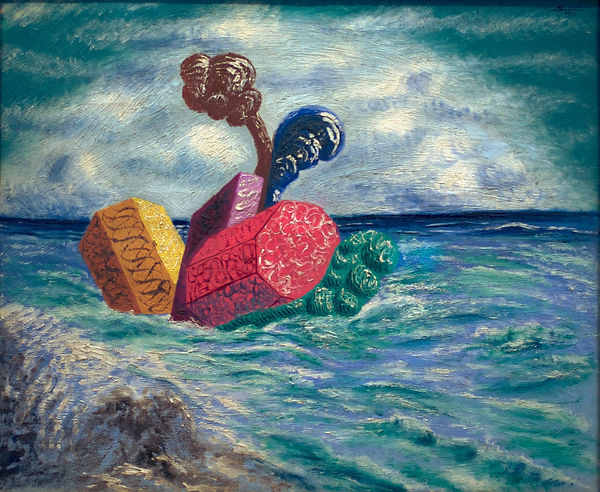
Alberto Savinio: Chevaucher marine , 1929

Alberto Savinio: Family of Lions 1927
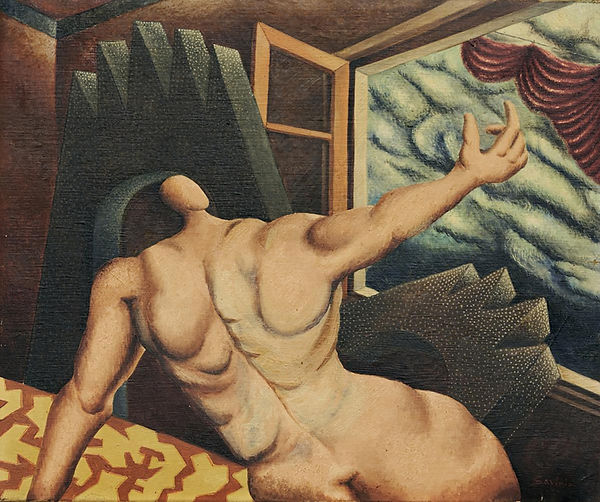
Alberto Savinio: The wait of Aeneas 1929

Alberto Savinio

Alberto Savinio: Idillio. 1944

Alberto Savinio: LA CAVALLERIZZA 1926-1927

Alberto Savinio

Alberto Savinio: Monumento alla musica signed and dated 'Savinio

Alberto Savinio: Le fantôme de l'Opéra

Alberto Savinio

Alberto Savinio

Alberto Savinio

Alberto Savinio

Alberto Savinio

Alberto Savinio

Alberto Savinio

Alberto Savinio

Alberto Savinio. “The Enchanted Island,” 1928

Alberto Savinio. L’annunciazione (The Annunciation), 1932

Alberto Savinio

Alberto Savinio

Alberto Savinio
Mario Tozzi
1895 – 1979
Mario Tozzi
(30 October 1895 – 8 September 1979) was an Italian painter. He was awarded the Legion of Honour by the French government.
Tozzi studied at the Accademia di Belle Arti di Bologna in Italy where he met Giorgio Morandi and Osvaldo Licini. He graduated in 1916.
After the First World War, he moved to Paris, France and founded the Groupe des Sept (also known as Les Italiens de Paris ) with Massimo Campigli, Giorgio de Chirico, Filippo de Pisis, Renato Paresce, Alberto Savinio and Gino Severini.
Tozzi returned to Rome in 1936. His work was exhibited at the Venice Biennale in 1938, 1942, 1948, 1952 and 1954.
He returned to France in 1971, dying there in 1979.

Mario Tozzi
Self Portrait

Mario Tozzi

Mario Tozzi

Mario Tozzi

Mario Tozzi

Mario Tozzi

Mario Tozzi

Mario Tozzi

Mario Tozzi

Mario Tozzi

Mario Tozzi

Mario Tozzi

Mario Tozzi

Mario Tozzi

Mario Tozzi

Mario Tozzi

Mario Tozzi

Mario Tozzi

Mario Tozzi

Mario Tozzi

Mario Tozzi

Mario Tozzi
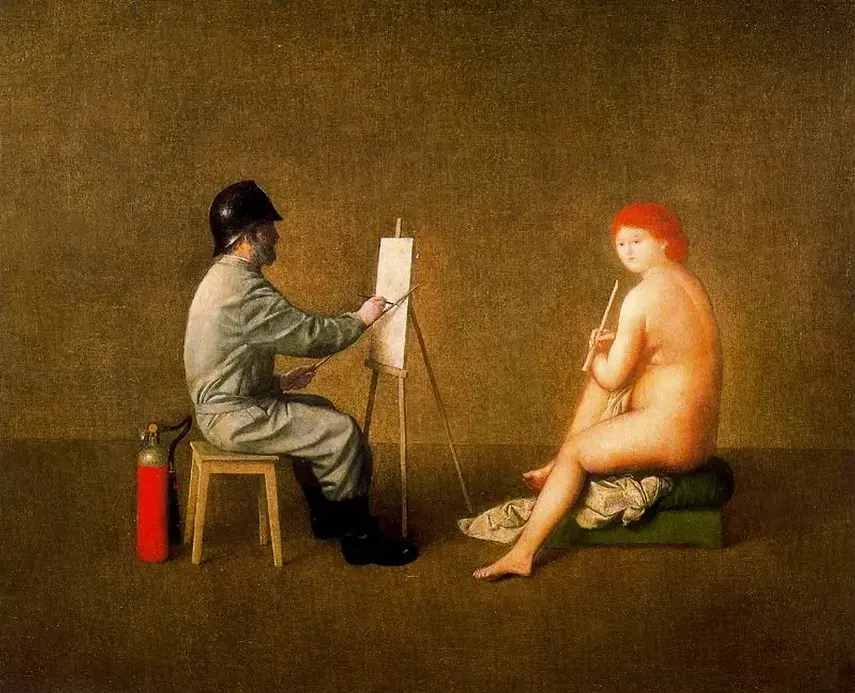
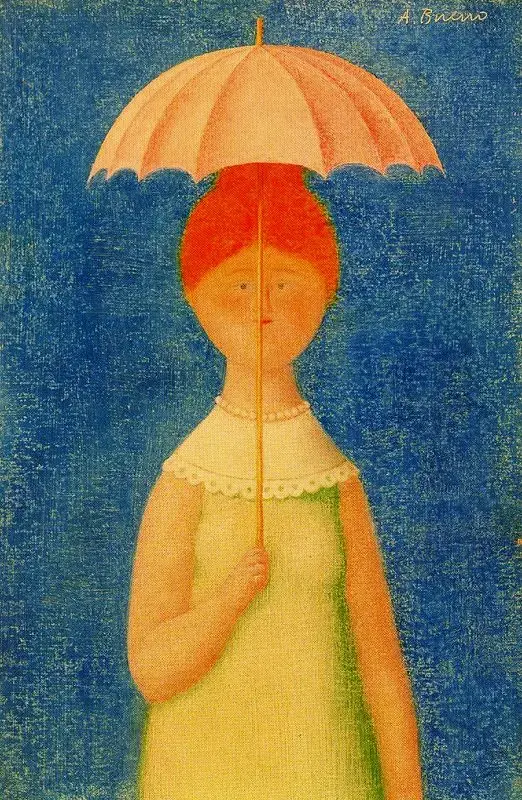
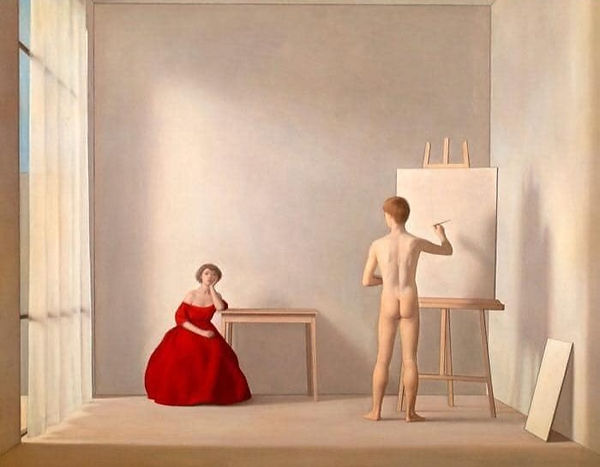
Antonio Bueno
1918 – 1984
Antonio Bueno
(21 July 1918 – 26 September 1984) was an Italian painter of Spanish origin, who acquired Italian citizenship in 1970. He was born in Berlin while his journalist father was posted there by the newspaper ABC of Madrid.
Bueno undertook art studies in Spain and Switzerland. In 1937, he was in Paris, where he exhibited at the Salon des Jeunes; then in 1940 with his brother Xavier, he moved to Italy. After a post-impressionist experience, immediately after World War II he joined the school of Armenian artist Gregorio Sciltian, painting trompe-l'œil work. With Pietro Annigoni and his own brother, Bueno took part in the "Pittori moderni della Realtà (Modern Painters of Reality)" group . A dynamic and restless experimenter, after these experiences he conducted in-depth research in genres: abstract painter in 1950–53 while working as secretary for the Numero magazine; neometaphysic painter with his clay pipe series in 1953–57; verist; materiologic as a follower of Informale with a number of imprint forms in 1960–62; signaletic and pop in the middle of the 1960s; neodada and visual painter – all this as an eternal combinative play of subjects and materials.
Bueno's final affirmation occurred at the Biennale di Venezia of 1984, a few months before his death, when he was already gravely ill: he exhibited a series of magistral work that was highly acclaimed and undoubtedly represents the apex of his whole production.

Antonio Bueno

Antonio Bueno

Antonio Bueno

Antonio Bueno

Antonio Bueno

Antonio Bueno

Antonio Bueno

Antonio Bueno

Antonio Bueno

Antonio Bueno
Antonio Bueno

Antonio Bueno

Antonio Bueno
Antonio Bueno

Antonio Bueno

Antonio Bueno

Antonio Bueno

Antonio Bueno

Antonio Bueno

Antonio Bueno

Antonio Bueno

Antonio Bueno

Antonio Bueno

Antonio Bueno

Antonio Bueno

Antonio Bueno

Antonio Bueno

Antonio Bueno

Antonio Bueno
Antonio Bueno