
Academic Art - I
Academic Art
Academic art, or Academicism, is a style of painting and sculpture produced under the influence of European academies of art. Specifically, academic art is the art and artists influenced by the standards of the French Académie des Beaux-Arts, which practiced under the movements of Neoclassicism and Romanticism, and the art that followed these two movements in the attempt to synthesize both of their styles, and which is best reflected by the paintings of William-Adolphe Bouguereau, Thomas Couture, and Hans Makart. In this context it is often called "academism", "academicism", "L'art pompier", and "eclecticism", and sometimes linked with "historicism" and "syncretism".
The first academy of art was founded in Florence in Italy by Cosimo I de' Medici, on 13 January 1563, under the influence of the architect Giorgio Vasari who called it the Accademia e Compagnia delle Arti del Disegno (Academy and Company for the Arts of Drawing) as it was divided in two different operative branches. While the Company was a kind of corporation which every working artist in Tuscany could join, the Academy comprised only the most eminent artistic personalities of Cosimo’s court, and had the task of supervising the whole artistic production of the medicean state. In this medicean institution students learned the "arti del disegno" (a term coined by Vasari) and heard lectures on anatomy and geometry. Another academy, the Accademia di San Luca (named after the patron saint of painters, St. Luke), was founded about a decade later in Rome. The Accademia di San Luca served an educational function and was more concerned with art theory than the Florentine one. In 1582 Annibale Carracci opened his very influential Academy of Desiderosi in Bologna without official support; in some ways this was more like a traditional artist's workshop, but that he felt the need to label it as an "academy" demonstrates the attraction of the idea at the time.
Accademia di San Luca later served as the model for the Académie royale de peinture et de sculpture founded in France in 1648, and which later became the Académie des beaux-arts. The Académie royale de peinture et de sculpture was founded in an effort to distinguish artists "who were gentlemen practicing a liberal art" from craftsmen, who were engaged in manual labor. This emphasis on the intellectual component of artmaking had a considerable impact on the subjects and styles of academic art.
Alexandre Cabanel
1823 -1889
Alexandre Cabanel (French: [kabanɛl]; 28 September 1823, Montpellier – 23 January 1889) was a French painter. He painted historical, classical and religious subjects in the academic style. He was also well known as a portrait painter. According to Diccionario Enciclopedico Salvat, Cabanel is the best representative of the L'art pompier and Napoleon III's preferred painter.
Cabanel entered the École des Beaux-Arts in Paris at the age of seventeen, and studied with François-Édouard Picot. He exhibited at the Paris Salon for the first time in 1844, and won the Prix de Rome scholarship in 1845 at the age of 22. Cabanel was elected a member of the Institute in 1863. He was appointed professor at the École des Beaux-Arts in 1864 and taught there until his death.
He was closely connected to the Paris Salon: "He was elected regularly to the Salon jury and his pupils could be counted by the hundred at the Salons. Through them, Cabanel did more than any other artist of his generation to form the character of belle époque French painting". His refusal together with William-Adolphe Bouguereau to allow the impressionist painter Édouard Manet and many other painters to exhibit their work in the Salon of 1863 led to the establishment of the Salon des Refusés by the French government. Cabanel won the Grande Médaille d'Honneur at the Salons of 1865, 1867, and 1878.
A successful academic painter, his 1863 painting The Birth of Venus is one of the best known examples of 19th-century academic painting. The picture was bought by the emperor Napoleon III; there is also a smaller replica (painted in 1875 for a banker, John Wolf) at the Metropolitan Museum of Art in New York City. It was given to them by Wolf in 1893.

Self Portrait

Albaydé
1848

The Birth of Venus
1863

The Fallen Angel
1847

The Death of Moses
1850

Nymph and Satyr
1860

The Expulsion of Adam and Eve from the Garden of Paradise
1867

The death of Francesca da Rimini and Paolo Malatesta
1870

Portrait of Countess Elizabeth Vorontsova-Dashkova
1873

Pandora
1873

Pandora
1873

Thamar
1875

Phaedra
1880

Ophelia
1883

Cleopatra Testing Poisons on Condemned Prisoners
1887

Orestes
1846
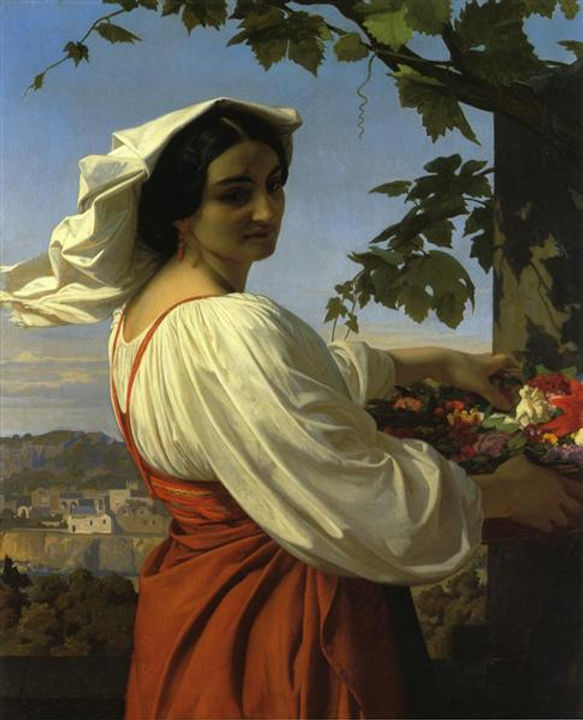
The Chiarrucia
1848

Algae and Boniface
c.1857

Desdemona
1871

The Countess of Keller
1873

Venus
1875

Samson and Delilah
1878

The beautiful Portia
1886
William-Adolphe Bouguereau
1825 - 1905
William-Adolphe Bouguereau (30 November 1825 – 19 August 1905) was a French academic painter. In his realistic genre paintings, he used mythological themes, making modern interpretations of classical subjects, with an emphasis on the female human body. During his life, he enjoyed significant popularity in France and the United States, was given numerous official honors, and received top prices for his work. As the quintessential salon painter of his generation, he was reviled by the Impressionist avant-garde. By the early twentieth century, Bouguereau and his art fell out of favor with the public, due in part to changing tastes. In the 1980s, a revival of interest in figure painting led to a rediscovery of Bouguereau and his work. He finished 822 known paintings, but the whereabouts of many are still unknown.

Self-portrait
1879

Equality Before Death
1848

Nymphs and Satyr
1873

The Holy Family
1863

The Bather
1864

Portrait de Mademoiselle Elizabeth Gardner
1879

L'Aurore or Dawn
1881

Soir, Evening or Evening Mood
1882

Psyche et L'Amour
1889

The Abduction of Psyche
1895

Bacchante
1894

Baigneuse
1870

After the Bath
1875

The Bather or Baigneuse
1879

Les Deux Baigneuses
1884

The Wave
1896

Nymphaeum
1878
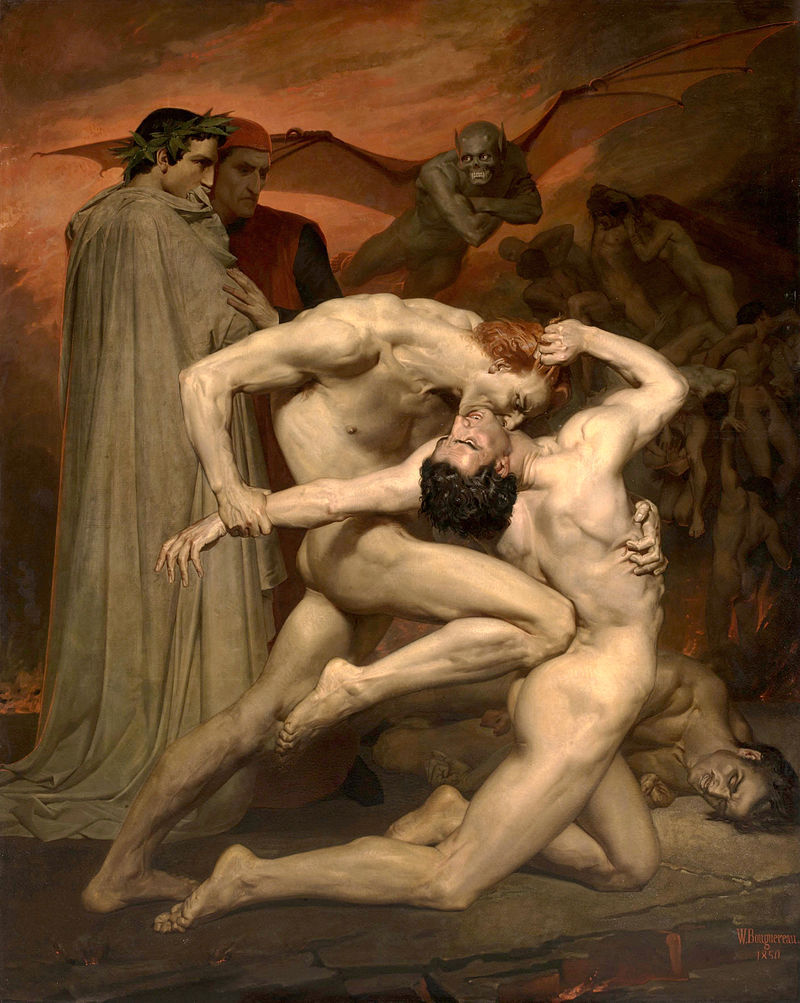
Dante and Virgil in Hell
1850

Italian Girl Drawing Water
1871

A Young Girl Defending Herself Against Eros
1880

Biblis
1884

Seated Nude
1884

The Bohemian
1890

Daisies
1894

Before The Bath
1900

Two Sisters
1901

At the Edge of the Brook
1875
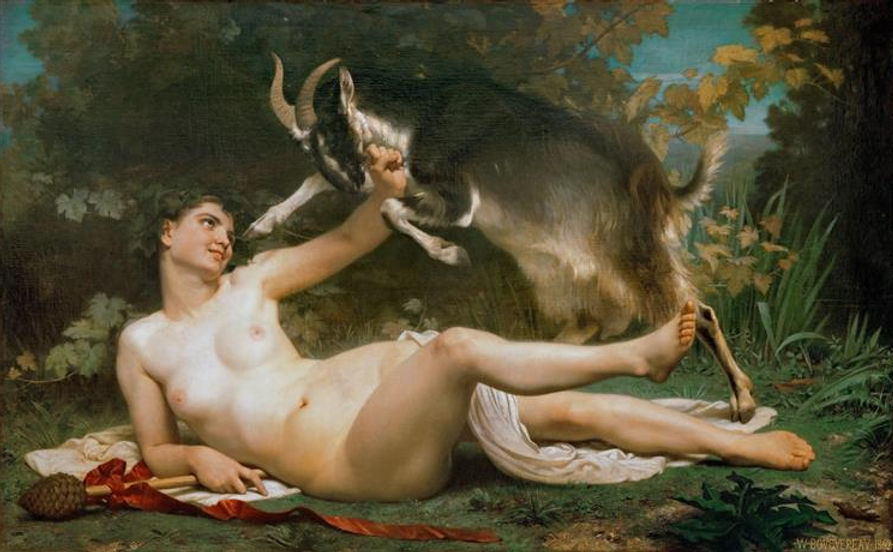
Bacchante playing with a goat
1862

Charity or The Indigent Family
1865

Rest in Harvest
c.1865
Frederic Leighton
1830 - 1896
Frederic Leighton, 1st Baron Leighton, PRA (3 December 1830 – 25 January 1896), known as Sir Frederic Leighton between 1878 and 1896, was a British Victorian painter, draughtsman, and sculptor. His works depicted historical, biblical, and classical subject matter in an academic style. His paintings were enormously popular and expensive, during his lifetime, but fell out of critical favour for many decades in the early 20th century.
Leighton was the bearer of the shortest-lived peerage in history; after only one day, his hereditary peerage became extinct upon his death.

Self-portrait
1880

Flaming June
1895
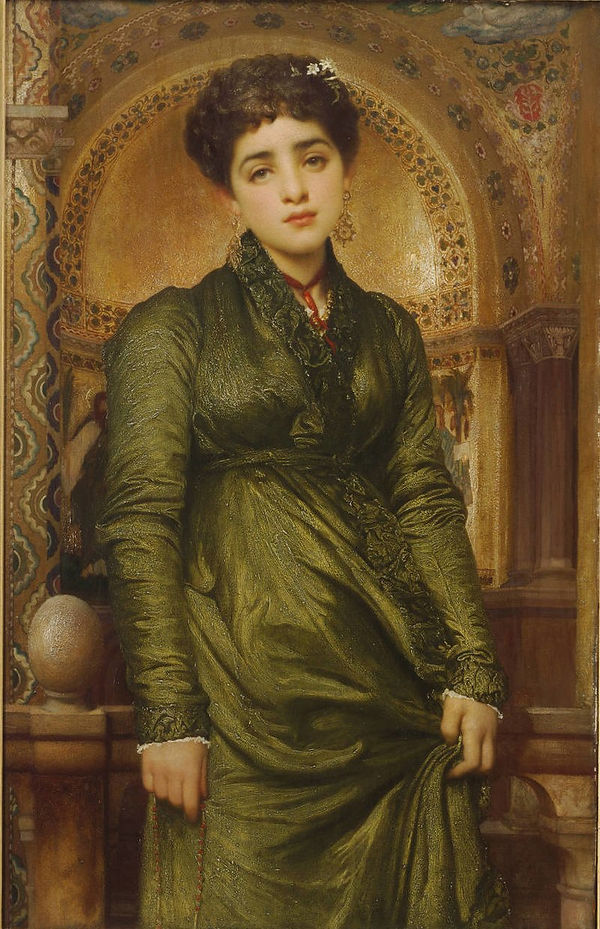
After Vespers
1871

Icarus and Daedalus
c. 1869

The Garden of the Hesperides
1892

The Last Watch of Hero
1880

Memories
1883

The Bath of Psyche
1879

Cymon and Iphigenia
1884

Portrait of May Sartoris

Biondina
1879

The Return of Persephone
1891

Kittens
1883

Winding the skein
1878

Bacchante
1895

Greek Girls Picking up Pebbles

And the sea gave up
1891

A Roman Lady
1858
Sir Lawrence Alma-Tadema
1836 - 1912
Sir Lawrence Alma-Tadema (8 January 1836 – 25 June 1912) was a Dutch painter who later settled in the United Kingdom, becoming the last officially recognised denizen in 1873. Born in Dronryp, the Netherlands, and trained at the Royal Academy of Antwerp, Belgium, he settled in London, England in 1870 and spent the rest of his life there.
A painter of mostly classical subjects, he became famous for his depictions of the luxury and decadence of the Roman Empire, with languorous figures set in fabulous marbled interiors or against a backdrop of dazzling blue Mediterranean sea and sky. One of the most popular Victorian painters, Alma-Tadema was admired during his lifetime for his draftsmanship and accurate depictions of Classical antiquity, but his work fell out of fashion after his death, and only since the 1960s has it been appreciated for its importance within Victorian painting.

Lawrence Alma-Tadema
Self-Portrait

Egyptian Chess Players
1865

The Mirror
1868

The Tepidarium
1881

Frigidarium
1890
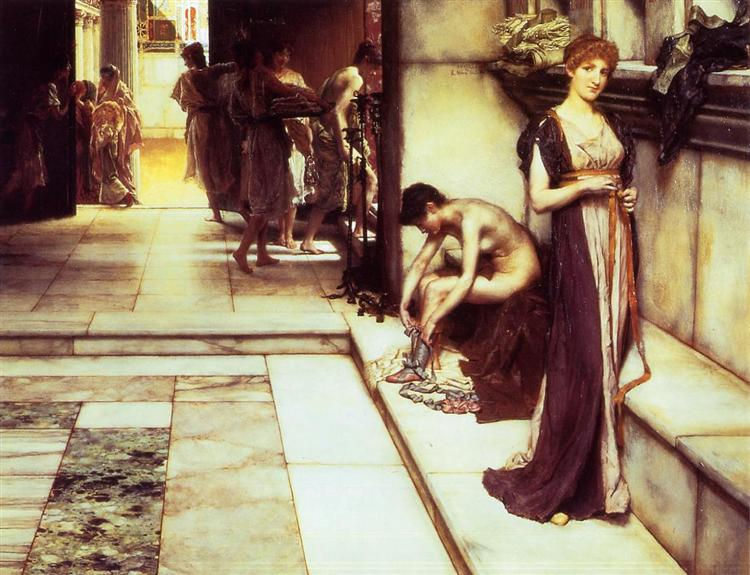
The Apodyterium
1886

The Women of Amphissa
1887

Favourite Poet
1888

The Roses of Heliogabalus
1888

Unconscious Rivals
1893

The Finding of Moses
1904

Sappho and Alcaeus
1881

The Death of Hippolytus
1860

Gallo Roman Women
1865

In the Peristyle
1866

Preparations for the Festivities
1866

A greek woman
1869

On the Steps of the Capitol

Portrait Of Miss Laura Theresa Epps
c.1871

Cherries
1873

Pandora
1881

The Meeting of Antony and Cleopatra
1885
John William Godward
1861 - 1922
John William Godward (9 August 1861 – 13 December 1922) was an English painter from the end of the Neo-Classicist era. He was a protégé of Sir Lawrence Alma-Tadema, but his style of painting fell out of favour with the rise of modern art.

self portrait

Far Away Thoughts
1892

With Violets Wreathed and Robe of Saffron Hue
1902

When the heart is young,
1902

In the Days of Sappho
1904

Dolce far Niente
1904

Flabellifera
1905

A fair reflection
1915

In the Tepidarium
1913

Drusilla
1906

The Tambourine Girl
1906

Nerissa
1906

The quiet pet
1906

A Pompeian Bath
1890

Venus Binding Her Hair
1897
